


Summary
Roughly 90% of global trade moves through maritime ports, yet many still run on legacy WiFi and cabled network technology that struggles with the coverage, reliability and bandwidth modern port operations demand. 5G connectivity, with its ultra-reliable low-latency communications, massive machine-type connections and enhanced mobile broadband, is positioned to solve that gap and open new revenue opportunities for telecom operators serving the ports and logistics sector.
Short-term opportunities include remote operation of gantry and quayside cranes, where operators can control multiple cranes from a safer, more comfortable location using high-bandwidth video feeds; machine vision and AI-based video surveillance for monitoring berths, personnel and container traffic, including helmet-detection and fatigue alerts; and automated guided vehicles that transport cargo around the port with minimal human intervention. Ports can also harness data collected from sensors, vehicles, cranes and cameras, alongside connected ships with augmented navigation, to improve operational decision-making.
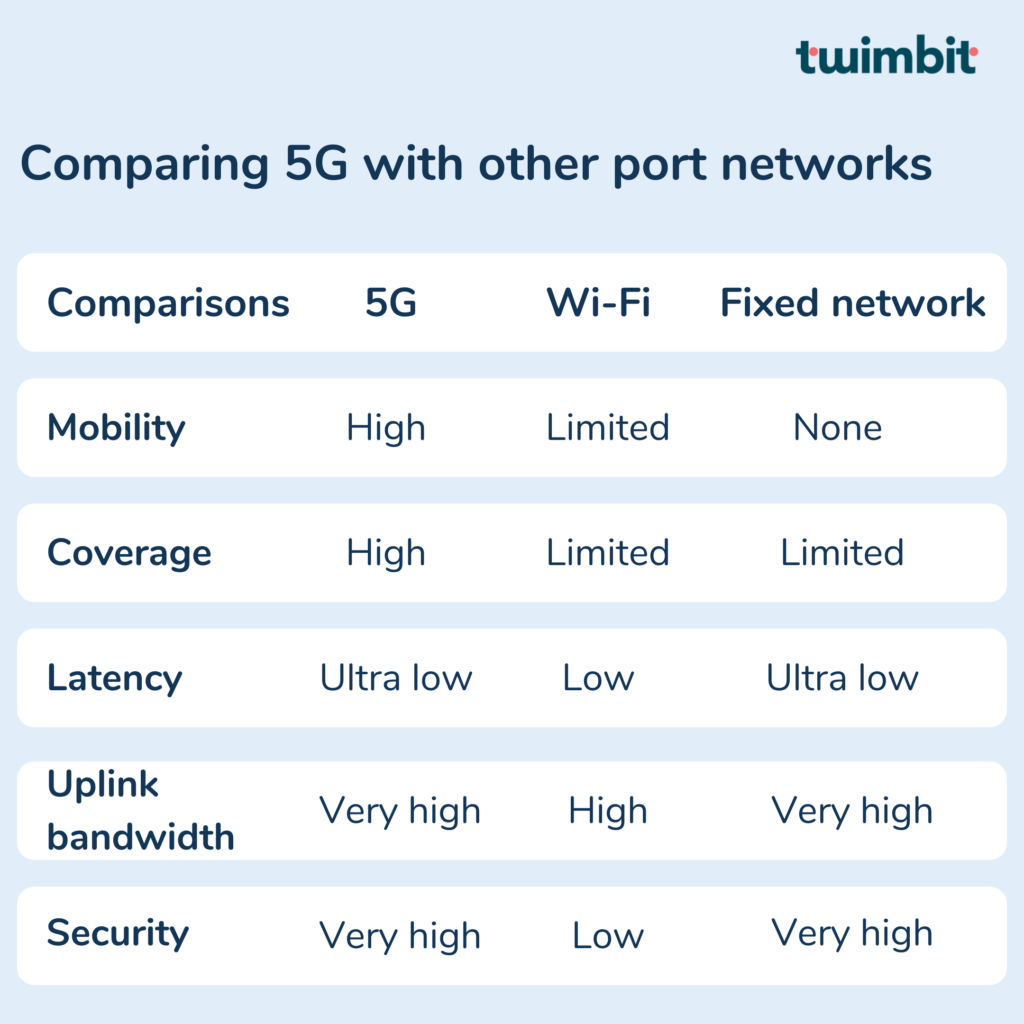
Looking further ahead, drone-based surveying and mapping using LIDAR technology stand out as a mid-term opportunity, with fully autonomous cargo trucks supported by network slicing as a longer-term possibility. Case examples from major global ports, including Hamburg, Barcelona, Singapore, Busan and Yangshan, illustrate how leading facilities are approaching connected-port transformation today and what other operators can learn from them.
What will it take for the world's busiest ports to become fully connected, 5G-enabled operations?
Schedule a call with Twimbit analyst to learn how we can help you.
Already a Twimbit client? Log in