


Summary
Enterprise AI adoption has moved well past scripted chatbots into dynamic, agent-driven systems that reshape how large organizations serve customers and run internal operations. Executives evaluating how to buy and integrate enterprise AI will find it distinguished from consumer AI by its emphasis on deep customization, regulatory compliance, and integration with existing IT infrastructure rather than broad usability. Procurement teams also navigate the added complexity of aligning input from IT, legal, and individual business units before a vendor contract is even signed.
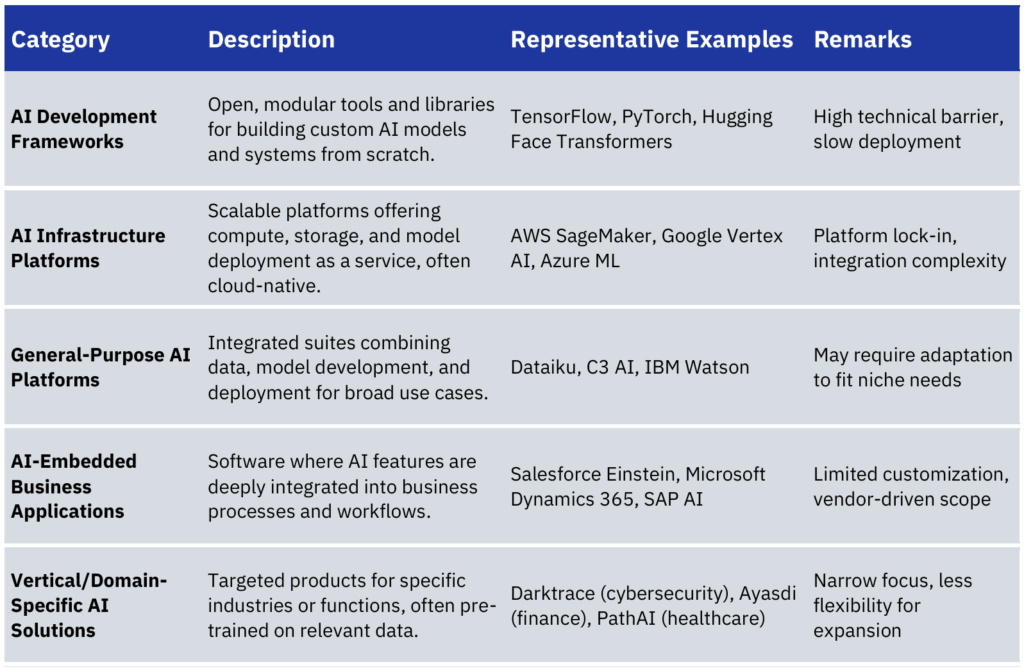
Organizations typically procure enterprise AI across four phases: use case prioritization, vendor selection, integration, and ongoing operation, with vendor evaluation and integration standing out as the phases most likely to determine whether AI investment scales or stalls. The enterprise AI product and services landscape spans development frameworks and platforms to domain-specific applications and advisory services, helping decision-makers map vendor claims against actual business needs.
Case studies on how Netflix, Grab, Spotify, and Dana have integrated enterprise AI into their operations illustrate different integration approaches in practice, offering executives concrete reference points as they weigh flexibility, complexity, and time-to-value trade-offs in their own AI strategy and roadmap.
- A framework for categorizing enterprise AI products and services
- Vendor selection criteria beyond technical capability
- Case studies spanning streaming, ride-hailing, music, and fintech
Schedule a call with Twimbit analyst to learn how we can help you.
Already a Twimbit client? Log in