


Summary
Every digital transformation journey depends on a clear grasp of its fundamental building blocks, and few concepts are as foundational, or as commonly misunderstood, as cloud computing itself. A set of foundational questions opens a series on cloud computing, designed to clarify how public cloud actually works before diving into market performance data across Southeast Asia. Cloud services are typically delivered by independent third-party providers over the public internet, with customers paying for what they use rather than investing upfront in dedicated hardware.
Public and private cloud models address different organizational priorities around security, control and infrastructure ownership: enterprises weighing tighter data control often lean toward private cloud, while others prioritize the flexibility of shared infrastructure and on-demand scaling.
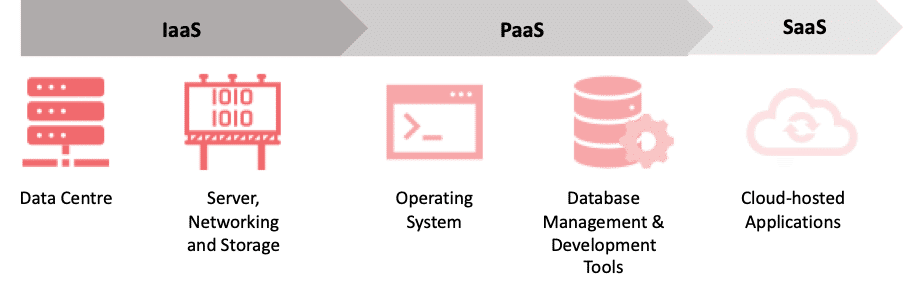
Three core service categories make up the public cloud landscape, Infrastructure-as-a-Service, Platform-as-a-Service and Software-as-a-Service, each delivering something distinct, with clear lines around who is responsible for managing it and how more specialized offerings like disaster recovery or backup services fit within this broader structure.
Practical benefits organizations gain from adopting public cloud include reduced hardware management overhead, remote work enabled at scale, and the elastic scalability that growing enterprises increasingly rely on for long-term technology planning.
What actually separates public cloud from private cloud, and which one fits your organization's priorities?
Schedule a call with Twimbit analyst to learn how we can help you.
Already a Twimbit client? Log in