


Summary
Banking is being redefined around customer experience, as retail banks compete less on interest rates and more on how seamlessly they fit into everyday financial life. Real-time services, voice interfaces, digital assistants, and all-in-one platforms are compressing what used to be multi-step banking journeys into a handful of taps, forcing incumbents to treat customer experience design as a core competitive discipline rather than a support function. This shift reflects a broader convergence across industries, as customers now expect the same fluid, on-demand experience from their bank that they already get from other everyday digital services.
Conversational AI in retail banking, including Capital One's assistant Eno, which helps customers track spending, catch overcharges, and manage accounts through natural conversation, illustrates how intelligent interfaces built on behavioral data are reshaping expectations for account management, alerts, and everyday money decisions.
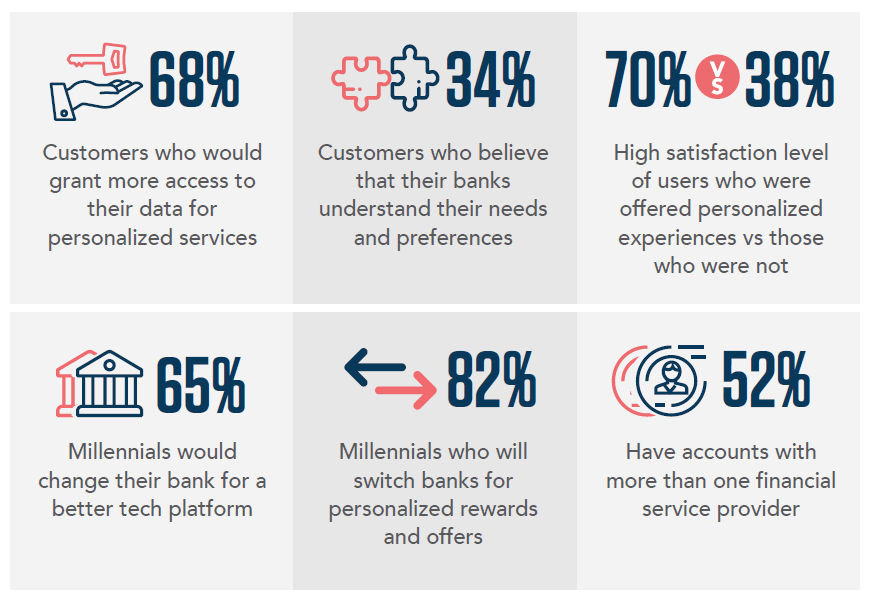
Overhauling legacy customer journeys comes down to three focus areas that separate experience leaders from laggards: personalization strategy, omnichannel journey design across shifting devices and touchpoints, and behavioral banking approaches that segment customers by patterns and expectations rather than product lines. Banking executives increasingly agree on where personalization matters most, yet few institutions have made it an operating priority.
What will it take for banks to turn customer experience from a stated priority into a lived reality across every channel?
Schedule a call with Twimbit analyst to learn how we can help you.
Already a Twimbit client? Log in