


Summary
As small and medium enterprises across Asia Pacific continue to struggle with access to credit, a growing mix of incumbent banks, neobanks and fintech companies are redefining how SME banking gets done. Two industry experts examine the different strategies these player types are using to close the financing gap and what each can learn from the other.
Legacy banks — many still centred on in-person branch relationships but shifting rapidly toward digital models — contrast with the more aggressive, data-driven and collaborative tactics used by neobanks and fintech challengers. Buy-now-pay-later style credit mechanisms, already proven in retail, are highlighted as an emerging model being tested for SME financing needs.
Four lessons for incumbent banks are drawn from newer market entrants, spanning collaboration strategy, customer acquisition, retention beyond pure financing relationships, and adopting a more experimental, start-up-style mindset toward product development. A framework for segmenting SME banking opportunities follows, based on two variables: how well a lender can assess a business owner's creditworthiness, and how far digital adoption has progressed within a given sector or market.
Real-world sector dynamics — including how food delivery and other on-demand categories have shaped SME financing demand in Southeast Asia — bring that framework into practical focus for banking and fintech leaders assessing where to focus next.
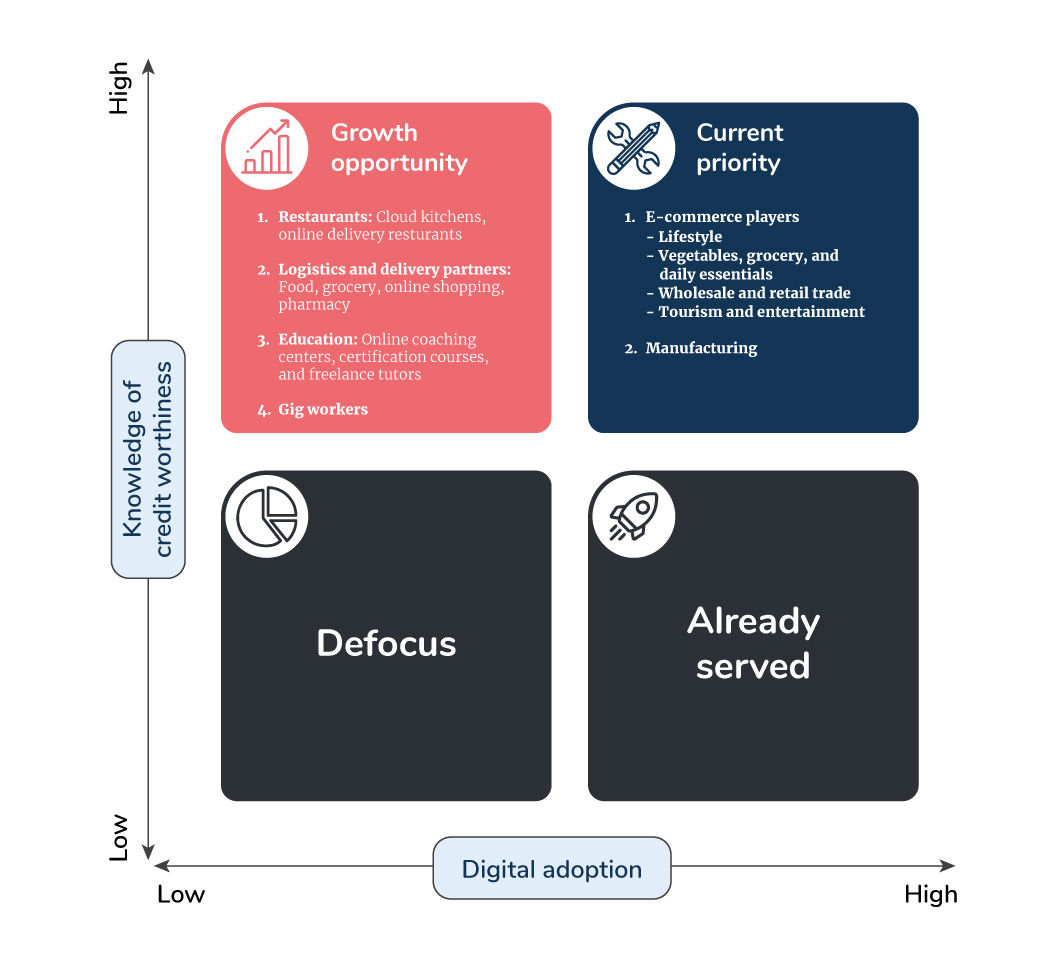
Which combination of creditworthiness data and digital readiness defines the biggest untapped opportunities in SME banking?
Schedule a call with Twimbit analyst to learn how we can help you.
Already a Twimbit client? Log in