


Summary
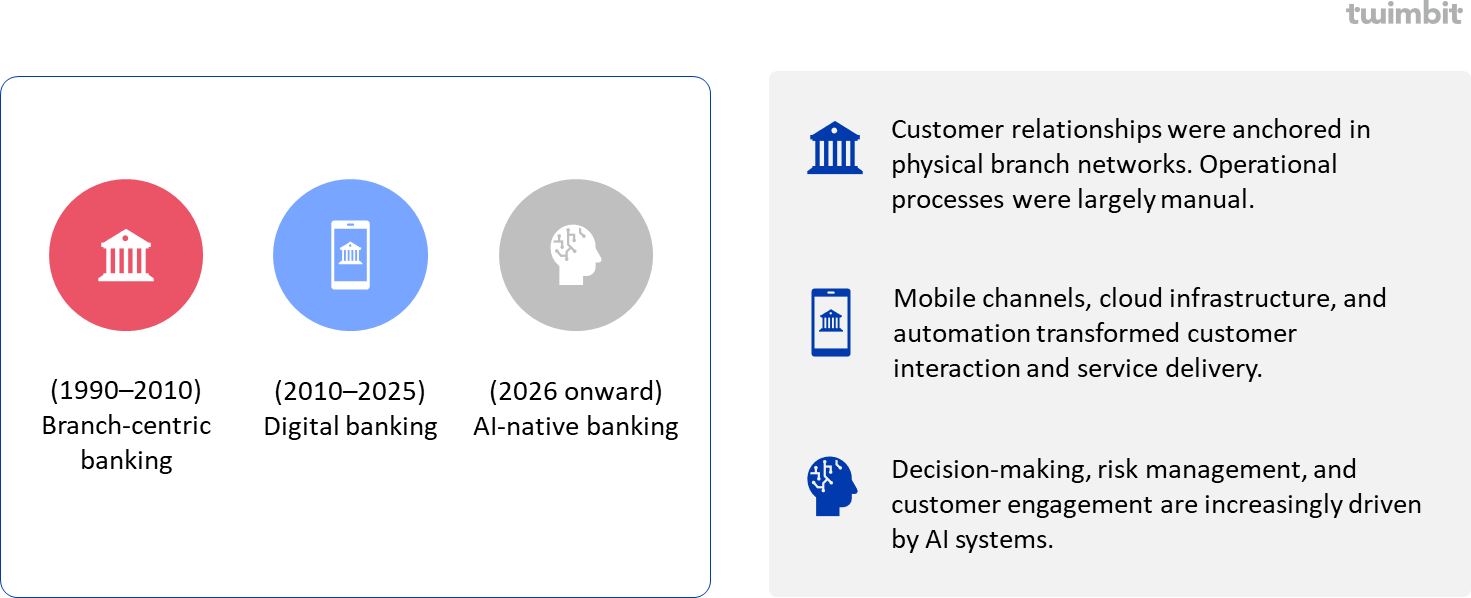
Global banking is entering a structural reset as artificial intelligence, real-time financial infrastructure and ecosystem-based distribution models begin to reshape how banks operate at their core — not just how they serve customers on the surface. The banking CEO agenda for 2026 takes shape against this backdrop, tracing how the industry has evolved through distinct operating-model phases and why competitive advantage now hinges on integrating AI-driven decision-making with capital allocation, risk management and compliance.
The economic stakes of becoming an AI-native institution come into sharp focus, alongside five structural forces converging to force the reset — from AI capability outpacing governance frameworks to rising capital intensity, accelerating fraud complexity, and operating models that can no longer keep pace with real-time expectations. Ten strategic priorities then span four domains: risk and resilience, technology and infrastructure, growth and distribution, and productivity and capital.
From AI-native risk decisioning and real-time financial crime resilience to ecosystem-driven distribution and human-AI operating models, the specific capability shifts CEOs need to plan for heading into 2026 and 2027 come into view, along with the strategic questions boards should be asking before the next planning cycle begins.
- Maps 10 strategic priorities across risk, technology, growth and capital domains
- Identifies 5 structural forces forcing a 2026 industry-wide operating model reset
How should banks redesign their operating architecture so AI, risk, capital and compliance function as one system?
Schedule a call with Twimbit analyst to learn how we can help you.
Already a Twimbit client? Log in